

We’re letting you know that this post contains sponsored links which Your Savvy Purse receives compensation for, which may impact their order of appearance.
The remote-work dream of the early 2020s was built on a promise of absolute freedom. We envisioned a lifestyle of balanced routines, home-cooked lunches, and ample time to focus on our physical well-being. But as we navigate the corporate reality of 2026, many virtual professionals have discovered a darker side to the home office: the sedentary trap.
When your bedroom, kitchen, and office all exist under the same roof, your natural physical transit boundaries collapse. You no longer walk across a sprawling corporate campus for meetings or navigate a daily commute. Instead, you move from the bed to the desk, and from the desk to the couch. It is shockingly easy to look down at your fitness tracker at 5:00 PM only to realize you have taken fewer than 1,500 steps all day.
This chronic lack of movement is a quiet drain on your lifestyle. It slows your metabolic baseline, stiffens your hip flexors, and accelerates the mental fog that turns a standard afternoon of corporate emails into a grueling endurance test.
But trying to step away from your desk for a traditional 60-minute walk can feel impossible when your Slack notifications are firing and your calendar is jammed with back-to-back video calls.
The solution isn’t to work less; it’s to integrate fluid movement directly into your workflow. Enter the under-desk walking pad.
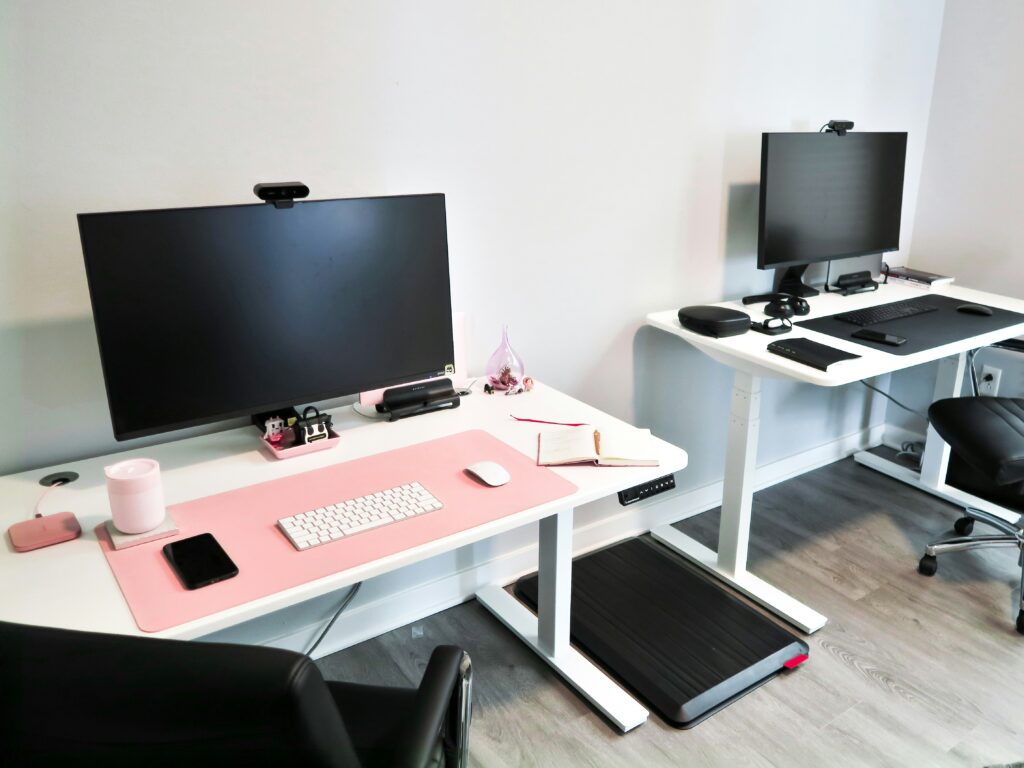
These sleek, compact, and ultra-quiet treadmills are designed to slide seamlessly beneath a standing desk, allowing you to stack your step goals directly on top of your daily administrative tasks. You can cruise through your daily 10,000 steps at a gentle 1.5 mph pace while typing briefs, reviewing data, or participating in camera-off corporate huddles.
Here is your 1,200-word tactical review blueprint of the absolute best compact under-desk walking pads on the market in 2026, and how to choose the right one to protect your physical vitality without sacrificing your professional output.
1. The Core Biomechanical Philosophy: Why Walking Pads Win
Before we look at the hardware, we have to look at the math of human movement. For years, fitness culture insisted on an “all-or-nothing” approach to exercise: if you weren’t sweating through an exhausting, high-intensity gym boot camp, it didn’t count.
Modern kinesiology has thoroughly debunked this myth, highlighting the massive value of N.E.A.T. (Non-Exercise Activity Thermogenesis). This is the energy expended for everything we do that is not sleeping, eating, or sports-like exercise.
Walking at a relaxed, low-impact pace of 1.2 to 1.8 mph doesn’t trigger a heavy spike in your stress hormone, cortisol. It keeps your heart rate in a gentle, active fat-burning zone, increases oxygen flow to the prefrontal cortex (the brain’s executive planning center), and prevents the spinal compression that comes from sitting in an office chair for eight hours. It transforms your body into an active, high-vibe engine while your mind handles the corporate heavy lifting.
2. The 2026 Walking Pad Showdown: The Best Models Reviewed
When sourcing a walking pad for a home office, you cannot just buy the cheapest motorized track on the internet. You have to evaluate specific structural parameters: noise level (so it doesn’t leak into your microphone), storage efficiency, and motor durability. Here are the three standout performers of the year:
A. The Storage King: WalkingPad X21 Double-Fold Treadmill
If you live in a minimalist apartment or a multi-functional space where visual clutter drains your mental bandwidth, the WalkingPad X21 is the undisputed gold standard.
- The Innovation: While most pads just lay flat or fold once in half, KingSmith’s X21 utilizes an advanced, innovative double-fold mechanism. The track folds up 180 degrees, and then folds again vertically against the handrail.
- The Real Estate: When fully stowed, it takes up a footprint no larger than a standard piece of carry-on luggage. You can wheel it directly into a closet or park it flush against a wall behind a decorative screen.
- The Performance: It features a robust, quiet brushless motor and an integrated digital display built directly into the sleek handlebar handrail, making it an aesthetic asset to any modern workspace.
B. The Ultra-Quiet Companion: UREVO 2-in-1 Under Desk Treadmill
For the remote worker whose day is defined by continuous, rapid-fire audio communication, noise reduction is the absolute highest priority. The UREVO 2-in-1 is engineered specifically to address acoustic privacy.
- The Performance: It operates on a multi-layer composition belt backed by eight silicone shock absorbers. When walking at a standard working pace of 1.5 mph, the machine outputs a low, ambient hum that sits well below 45 decibels—quieter than the background white noise of a refrigerator.
- The Microphone Test: Your corporate team members on Zoom or Microsoft Teams won’t hear a thing, especially if you pair your setup with standard noise-canceling software or a high-quality directional microphone. It allows you to log miles during long status update calls without anyone knowing you are actively crushing your step metrics.
C. The Heavy-Duty Budget Champion: DeerRun Smart Under Desk Walking Pad
If you are looking to optimize your physical workspace on a sensible, realistic budget, the DeerRun Smart Pad delivers exceptional structural value without a luxury price tag.
- The Performance: It features a high-density steel frame that supports a higher weight capacity than traditional ultra-light plastic models, offering a sturdy, stable gait with zero frame flex.
- The Tech Integration: It syncs effortlessly via Bluetooth to dedicated fitness tracking apps, allowing you to log your daily distance milestones, speeds, and calorie metrics directly onto your digital planner or phone dashboard automatically. It is a streamlined, no-nonsense workhorse that gets the job done for a fraction of the cost of premium lifestyle brands.
3. The “First Week” Integration Protocol: How to Type and Walk
The most common concern for beginners is coordination: How am I supposed to answer high-stakes corporate emails or analyze spreadsheets while my lower body is in continuous motion? If you try to hop onto your walking pad on Monday morning at 2.5 mph while drafting a complex project proposal, you will instantly feel dizzy, your typing accuracy will plummet, and you will abandon the machine out of sheer frustration. You have to train your motor pathways with an intentional ramp-up schedule.
The Speed Rule
When working, your speed should stay strictly between 1.2 mph and 1.8 mph. This is a casual stroll, not a fitness power-walk. At this pace, your upper body remains perfectly stable, allowing your fingers to rest naturally on your keyboard and your eyes to track text across your monitor without strain.
The Task Matrix: Matching Movement to Focus
To protect your professional output, audit your daily calendar and assign your walking blocks to specific, low-cognitive-strain administrative tasks:
- The Walking Blocks: Camera-off internal meetings, webinar training sessions, routing administrative email filtering, daily calendar audits, and long-form reading research blocks.
- The Seated Blocks: High-intensity copywriting, complex code architecture, deep financial calculations, or high-stakes client-facing video presentations where total eye contact and stationary focus are required.
4. The Logistical Maintenance Checklist
To ensure your walking pad remains a smooth, quiet asset to your home office for years to come, establish a quick, monthly maintenance ritual:
- The Lubrication Habit: Unlike traditional gym treadmills, compact walking pads require regular silicone oil lubrication beneath the running belt every 40 to 50 miles of use. Skipping this step increases friction, which strains the motor and causes the machine to become progressively louder.
- Belt Realignment: If you notice your walking belt shifting or sliding toward one side of the frame, use the included Allen wrench to turn the rear adjustment bolts a quarter-turn at a time until the track sits perfectly centered.
- The Visual Reset: When your workday ends, do not leave your walking pad sitting awkwardly in the middle of your office floor space. Slide it beneath your desk, stow it vertically, or tuck it beneath a nearby sofa. Reclaiming your visual environment at 5:00 PM is vital for letting your brain disconnect from work mode and settle into an evening of domestic rest.
Final Thoughts
The under-desk walking pad is the ultimate act of modern workspace resourcefulness. It proves that a highly productive corporate career does not require sacrificing your body’s innate need for movement, energy, and strength. By introducing a compact, quiet walking pad into your standing desk configuration, you change the structural parameters of your day.
You don’t need to choose between your career metrics and your personal health goals. You can effortlessly conquer both simultaneously. Step onto the track tomorrow morning, lock in your gentle working pace, and watch your step goals, your daily focus, and your long-term vitality thrive in perfect, harmonious motion.