
We’re letting you know that this post contains sponsored links which Your Savvy Purse receives compensation for, which may impact their order of appearance.
Every parent knows the moment: your child announces, a week before Halloween, that they want to be something very specific, very elaborate, and very much not available in stores at a price you’re excited about. Store-bought costumes can run expensive, and many are outgrown or forgotten after a single night. The good news is that kids are often just as thrilled, and sometimes more so, with a costume they helped make themselves.
A DIY costume doesn’t need sewing skills or a craft room. With a little imagination, a few household items, and your child’s own ideas, you can put together something that feels special and one of a kind. Here’s how to make easy kids’ Halloween costumes without a stressful shopping trip.
Start by Asking Your Child What They Actually Want to Be
It’s tempting to jump straight to ideas, but kids usually have strong opinions about what they want to be, and a costume they chose tends to get worn with far more enthusiasm. Their idea might sound simple or surprisingly detailed, and either way it gives you a clear starting point.
Do this: Sit down together and let your child describe or draw their costume idea, then talk through which parts are most important to them. Focusing on the one or two features that make the character recognizable helps you decide where to put your effort.
Raid the Closets and Toy Box Before Buying Anything
Between dress-up clothes, old sports gear, and everyday items, most homes hold plenty of costume material. A cape can be a towel or a scarf, a crown can come from cardboard, and boots, hats, and bags can often be borrowed from the family wardrobe.
Try this: Lay out any clothing, accessories, and toys that might fit the theme, then see what combinations naturally appear. Kids often enjoy this treasure-hunt step, and it keeps spending to a minimum.
Use Cardboard Boxes for Big Costume Pieces
Cardboard is one of the most useful and forgiving costume materials, and it’s usually free. With a little tape, paint, or markers, a simple box can become a robot body, a race car, a castle, or a vending machine.
Do this: Cut armholes and a head opening in a clean cardboard box, then decorate it with markers, paint, or construction paper. Smooth any rough edges with tape so they don’t scratch, and make sure your child can walk, sit, and see comfortably while wearing it.
Turn Everyday Clothes Into Characters With Simple Add-Ons
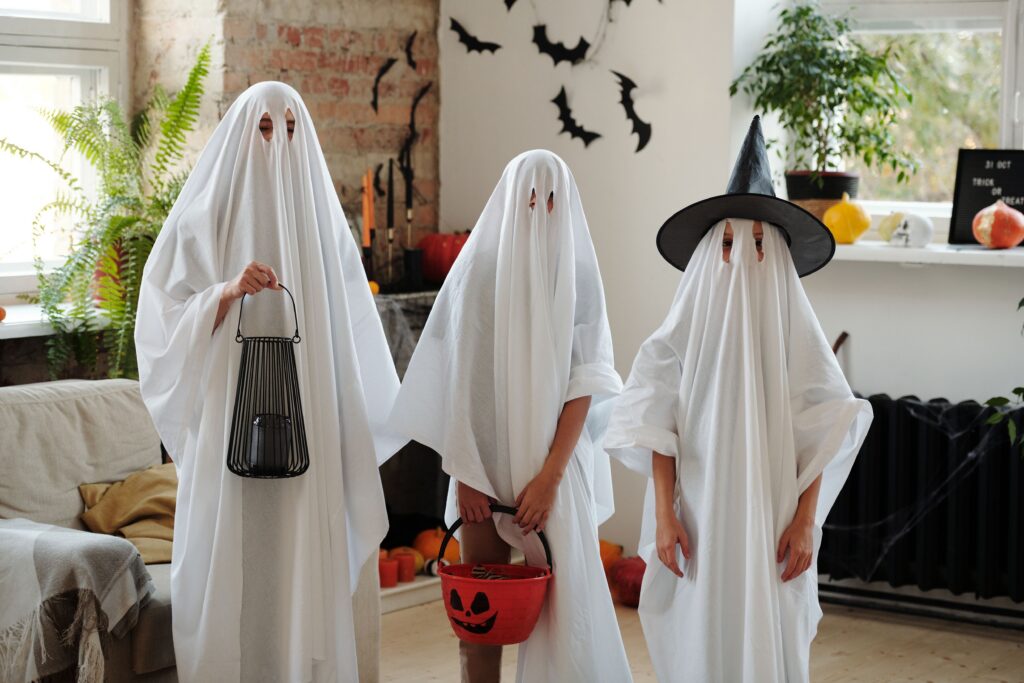
Many classic costumes are really just regular clothes plus a few clever details. A raincoat and boots become a firefighter, a white shirt and stethoscope become a doctor, and a striped shirt and a beanie become a friendly pirate.
Try this: Choose a base outfit in the right color and add two or three small accessories that clarify the character, like a badge, a hat, or a handmade prop. This is often the fastest way to put together a costume in a single evening.
Make Props and Accessories From Craft-Drawer Supplies
Props are often what make a costume feel real to kids, and they’re usually easy to make. Wands, crowns, wings, and tools can be built from paper, foam, felt, and cardboard, and kids love helping decorate them.
Do this: Gather paper, markers, glue, tape, and any craft scraps, and let your child decorate their own prop. Stick to soft, lightweight materials and avoid anything sharp or pointed, so the prop is safe to carry around in a crowd.
Use Face Paint Carefully Instead of Masks
Masks can limit vision and trap heat, which isn’t ideal for little ones walking around in the dark. Face paint or simple makeup is often a more comfortable alternative, though kids’ skin can be sensitive.
Try this: Choose products made specifically for skin and, ahead of time, test a small dab on your child’s arm to check for irritation. Wash it off gently at the end of the night, and skip it entirely if your child dislikes how it feels.
Keep Comfort and Safety Front and Center
A costume that looks great but is itchy, too long, or too hot can end the night early. Kids will be climbing steps, walking in the dark, and carrying treat bags, so it helps to plan with practicality in mind.
Do this: Check that hems don’t drag on the ground, that sleeves and capes won’t catch on things, and that your child can see clearly. Adding a few strips of reflective tape or giving them a small flashlight makes them easier to spot after dark, and a layer underneath can help if the evening is chilly.
Let Your Child Help Wherever They Can
Part of the fun of a DIY costume is the making itself. Even young children can help with painting, gluing, and decorating, and older kids may enjoy taking charge of the whole project.
Try this: Assign age-appropriate jobs, like coloring a prop, choosing decorations, or testing the costume as it comes together. The pride kids feel in wearing something they helped create often becomes a favorite part of Halloween.
Plan a Backup Version for Cold or Rainy Nights
Halloween weather can be unpredictable, and a costume that looks adorable but doesn’t work over a jacket can lead to a disappointed child or a cranky evening. A little planning ahead means the costume still shines when the weather doesn’t cooperate.
Try this: Make the costume loose enough to fit over warm layers, or design it so a coat can be decorated to match the theme. A cardboard costume can also be protected with a clear poncho, and having a plan B takes the pressure off at the last minute.
Save the Pieces for Future Dress-Up Play
A homemade costume doesn’t have to end after October 31. The pieces can often be reused for imaginative play, school events, or next year’s ideas, which stretches the value of the time you’ve spent.
Do this: Keep a labeled bin or box for costume pieces, adding to it each year. Over time, it becomes a collection that makes future costumes quicker and cheaper to put together.
The Bottom Line
Great kids’ Halloween costumes don’t have to be expensive or complicated. Starting with your child’s ideas, raiding the closets, using cardboard and craft supplies, and keeping comfort and safety in mind can get you to a costume your child will be proud to wear. The best part is the time you spend making it together, and that tends to be remembered long after the candy is gone.