
We’re letting you know that this post contains sponsored links which Your Savvy Purse receives compensation for, which may impact their order of appearance.
If you have passed by a local park or tennis complex lately, you’ve likely heard it: that distinct, rhythmic pop-pop-pop echoing across the asphalt. It is the signature soundtrack of pickleball, a sport that has transcended its status as a backyard hobby to become the definitive athletic movement of the 2020s.
In a world that spent years feeling fragmented and isolated, pickleball has emerged as the ultimate social remedy. It is the athletic embodiment of parallel play—a sport where a 19-year-old college student can seamlessly compete against a 65-year-old retiree, and both can walk off the court laughing. It’s highly accessible, incredibly fast-paced, and offers a massive physical endorphin hit without the steep learning curve of tennis or the high costs of a country club golf membership.
But as the sport’s popularity has exploded, so has the marketing machine surrounding it. Step into a sporting goods store and you will see carbon-fiber paddles retailing for $250 and designer “court-side” athletic wear that costs a week’s worth of groceries.
Here is the good news: you do not need a country club budget to join the movement. You can step onto a court fully equipped, styled, and ready to play for under $30. Here is your 1,200-word blueprint to mastering the pickleball entry plan.
1. The Anatomy of the Phenomenon: Why It Rules the Decade
Pickleball’s dominance comes down to a brilliant equation of design and psychology. The court is exactly one-third the size of a standard tennis court, meaning less grueling running and more rapid-fire, close-quarters interaction.
- The Level Playing Field: Because the ball is made of perforated plastic (similar to a wiffle ball), it travels slower and doesn’t bounce as high as a tennis ball. This minimizes the advantage of raw physical strength and maximizes the value of strategy, quick reflexes, and placement.
- The Social Battery Glow-Up: Because players stand relatively close to each other—separated only by a 44-foot court—pickleball is inherently conversational. It is a community-building engine disguised as a workout. It’s the perfect antidote to digital fatigue, offering an analog, screen-free space to connect with old friends and meet neighbors.
2. The $20 Paddle Play: Choosing Your Starter Gear
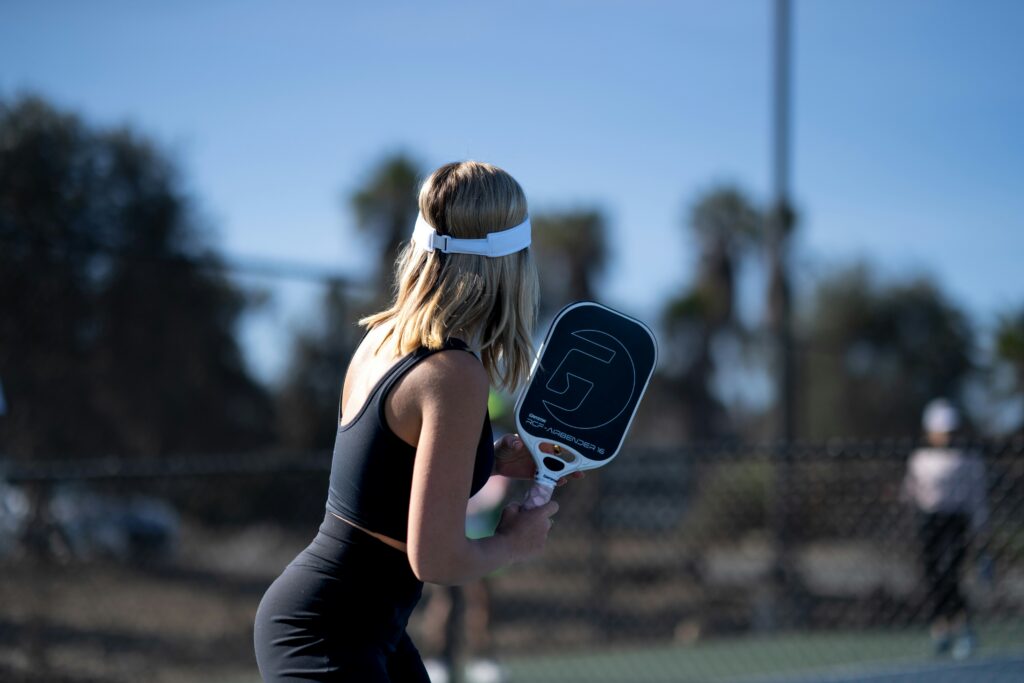
The biggest hurdle for beginners is the gear panic. When you see professionals using thermoformed, raw carbon-fiber paddles, it’s easy to think your basic wooden paddle from gym class won’t cut it. But if you are just starting out, you can get a highly responsive, USAPA-approved paddle for less than the price of a delivery lunch.
Look for Fiberglass (Composite)
Avoid the heavy wooden paddles, which can strain your wrist, but skip the expensive carbon fiber for now. Fiberglass is the ultimate sweet spot for a budget entry. It provides a massive amount of “pop” off the face, helping you return deep shots with minimal effort.
- The Amazon/Target Hack: Search for brands like Joncryl, Niupipo, or SLK by Selkirk starter sets. You can routinely find a two-paddle fiberglass set that includes a couple of outdoor balls for $20 to $25.
- The Shared Receipt: Split the cost of a two-pack with a friend! Suddenly, your gear investment drops to just $10 to $12 per person.
The Ball Breakdown
If your starter set doesn’t include balls, make sure to buy a three-pack of Outdoor Pickleballs (like Franklin X-40 or Onix Pure 2). Outdoor balls are heavier, have smaller holes to resist the wind, and feature a harder plastic shell designed to withstand the friction of concrete courts. A three-pack will run you about $7.
3. Finding the Green Lights: How to Play for Free
You do not need a luxury gym membership or a private club reservation to play. The pickleball community is built on the ethos of public access, and municipal parks across the country have responded by converting underutilized spaces into pristine public courts.
The “Open Play” System
The easiest way to get into the game is to find a park that utilizes an Open Play rotation.
- How it works: Public courts often feature a “paddle saddle” or a row of hooks on the fence. If the courts are full, you place your paddle in line. When a game finishes, the next four players step onto the court.
- The Beginner Vibe: Don’t be intimidated! The pickleball community is famously welcoming. Simply tell the group, “Hey, I’m a beginner, mind if I jump in?” and you will instantly find players willing to teach you the rules of “the kitchen” (the non-volley zone near the net).
Digital Discovery Tools
Use free apps like Places2Play (managed by USA Pickleball) or Playbypoint to map out your city’s public layout. Many suburban areas have repurposed older tennis courts into dedicated pickleball zones featuring solar-powered lights, allowing you to play during the cool evening hours after work for $0.
4. Court-Side Style: What to Wear from Your Closet
You do not need to buy a specific “pickleball dress” or a specialized pleated skirt to look the part. The court aesthetic is inherently casual, functional, and rooted in classic athletic styling.
- The Top: A basic breathable tech tee, an oversized cotton t-shirt, or a sports bra paired with a lightweight tank top is perfect.
- The Bottoms: Anything that allows for lateral movement. Think biker shorts, athletic skirts you already own for running, or lightweight gym shorts with zipper pockets (highly functional for holding extra balls between serves).
- The Footwear (Non-Negotiable): This is where safety beats style. Do not wear running shoes with thick, pillowy foam soles. Running shoes are designed for forward motion and lack lateral support, which can lead to rolled ankles on a pickleball court. Instead, opt for a flat-soled sneaker, a classic skate shoe (like Vans or canvas sneakers), or cross-trainers that keep your feet planted firmly to the ground.
5. The 60-Second Rule Primer
Before you step onto the court, memorize these three golden rules so you can play with total confidence:
- The Underhand Serve: You must strike the ball below your waist with an underhand motion, keeping both feet behind the baseline.
- The Two-Bounce Rule: When the ball is served, the receiving team must let it bounce once before hitting it back. Then, the serving team must also let it bounce once before returning it. After those two initial bounces, you can volley the ball out of the air.
- Stay Out of the Kitchen: The 7-foot painted zone closest to the net is called “the kitchen.” You cannot step inside this zone to hit a ball out of the air (a volley). You can only step into the kitchen if the ball has already bounced inside it first.
Final Thoughts
The pickleball movement isn’t a passing trend; it is a permanent lifestyle shift toward sustainable, low-cost wellness and community. It is a sport that allows you to engage your body, protect your budget, and clear your mental load all before the sun goes down.
By splitting a starter paddle set, utilizing your city’s free public parks, and rocking the athletic gear already sitting in your closet, you can join the definitive sport of the decade for a fraction of the cost of a single gym class. So grab a friend, grab a paddle, and head out to the courts. The community is waiting, the net is set, and your first epic rally is just a serve away.