

We’re letting you know that this post contains sponsored links which Your Savvy Purse receives compensation for, which may impact their order of appearance.
Setting up a home office can spiral into an expensive project fast, especially once you start browsing high-end furniture sites for the “perfect” desk setup. IKEA has quietly become one of the best resources for building a genuinely functional home office without the premium price tag, offering a surprising range of desks, storage, and organizational pieces that hold up well to daily use. Below is a practical rundown of the categories worth prioritizing when building out a home office on an IKEA budget, along with what to look for in each.
Why IKEA Works So Well for Home Offices
IKEA’s modular approach to furniture — interchangeable legs, tabletops, and storage components sold separately — makes it particularly well-suited for home offices, since it allows you to customize a setup to fit an oddly shaped room, a specific desk height, or a particular storage need without committing to an expensive, fixed furniture set. It also means you can start with the basics and expand the setup over time as your needs (or budget) evolve.
1. A Desk That Fits Your Actual Space
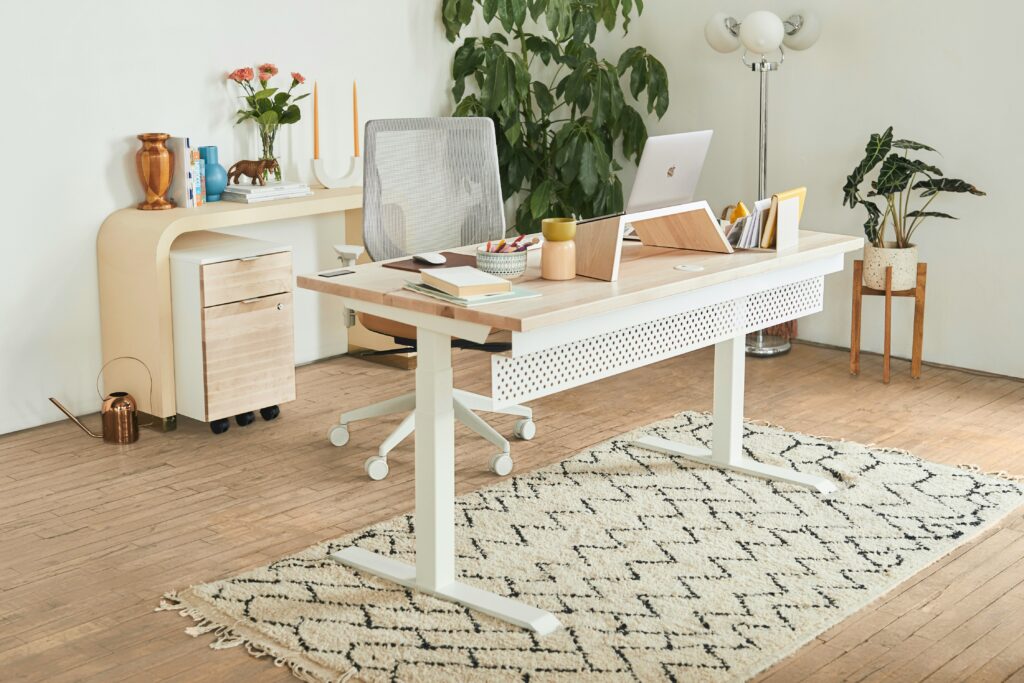
IKEA’s desk lineup ranges from simple tabletop-and-leg combinations to more polished, finished desks with built-in cable management. For smaller spaces, a simple tabletop paired with adjustable legs offers flexibility in sizing that a pre-built desk often can’t match, since you can choose the exact dimensions that fit your room rather than settling for a standard size.
For those wanting a more finished, professional look, IKEA’s more structured office desk lines offer built-in storage drawers and a more polished aesthetic, which can matter if your home office doubles as a space visible during video calls.
What to prioritize: Desk depth matters more than most people initially consider — a desk that’s too shallow makes it hard to maintain proper monitor distance, while too deep a desk in a small room can make the space feel cramped.
2. An Adjustable Office Chair
Of all the items in a home office, the chair is arguably the one worth spending the most thought on, since poor ergonomics compound over months and years of daily use. IKEA’s ergonomic office chair lines offer adjustable height, lumbar support, and armrests at a fraction of the cost of premium ergonomic brands, making them a reasonable starting point for most home office setups.
What to prioritize: Look for adjustable seat height, adjustable armrests, and some form of lumbar support. Testing a chair in-store, if possible, is worth the effort, since comfort varies significantly based on individual body proportions.
3. Vertical Storage to Maximize Small Spaces
Home offices are often carved out of a spare bedroom, a corner of a living room, or even a closet, which makes vertical storage particularly valuable. IKEA’s shelving units, particularly modular cube storage systems, allow you to build storage upward rather than requiring additional floor space, which matters enormously in smaller home office setups.
What to prioritize: Cube-style modular shelving offers the most flexibility, since it can be configured with baskets, boxes, or open shelving depending on what you’re storing, and can be expanded later if your storage needs grow.
4. A Filing Cabinet or Drawer System for Paperwork
Even in an increasingly digital world, most home offices still accumulate physical paperwork — tax documents, mail, printed materials — that needs a designated home rather than piling up on the desk itself. IKEA’s rolling drawer units and filing cabinets offer a compact, mobile storage option that can tuck under a desk when not in use.
What to prioritize: A rolling cabinet that fits under your specific desk height allows the unit to double as either storage or an additional surface, maximizing a small footprint.
5. A Pegboard or Wall-Mounted Organization System
IKEA’s wall-mounted pegboard and accessory systems offer an efficient way to keep frequently used items (scissors, chargers, notebooks, small tools) accessible without cluttering desk surface space. This kind of vertical organization is particularly useful in small home offices where every inch of desk space matters.
What to prioritize: Look for a system with a range of accessory hooks, small baskets, and holders, since the value of a pegboard system comes largely from how well you can customize it to your specific daily tools.
6. Proper Desk Lighting
Overhead room lighting is rarely sufficient for focused desk work, and poor lighting contributes to eye strain during long work sessions. IKEA’s desk lamp lineup includes several adjustable, budget-friendly options that provide direct, focused task lighting without requiring an expensive lighting overhaul.
What to prioritize: An adjustable arm or gooseneck design allows you to direct light exactly where needed, which matters more for reducing eye strain than the specific style of the lamp.
7. Cable Management Accessories
A tangle of cords under a desk isn’t just an eyesore — it makes cleaning, rearranging, and troubleshooting tech issues far more annoying than they need to be. IKEA offers a range of inexpensive cable management accessories, including under-desk trays and cord organizers, that keep cables contained and out of sight.
What to prioritize: An under-desk cable tray, mounted to the underside of your desk, is one of the simplest, most effective upgrades for keeping a power strip and cords off the floor entirely.
8. A Bookshelf or Display Storage for Reference Materials
For those who still rely on physical books, binders, or reference materials, a simple bookshelf provides both storage and an opportunity to add some personality to the space through displayed items, plants, or decor alongside functional storage.
What to prioritize: Adjustable shelf heights allow the same unit to accommodate anything from tall binders to smaller decorative objects, which adds flexibility as your storage needs shift over time.
9. A Small Side Table or Rolling Cart
An additional small table or rolling cart adds flexible surface space for a printer, a secondary monitor, or simply an extra spot to set materials during a project, without requiring a larger primary desk. Rolling versions add the benefit of being easily moved out of the way when not needed.
What to prioritize: A cart with some form of lower shelf or storage compartment offers more functional use than a simple flat surface alone.
Building a Budget-Conscious Setup
For those starting from scratch, it’s worth prioritizing purchases in a specific order: the chair and desk first, since these have the most direct impact on daily comfort and are hardest to retrofit later, followed by storage solutions, and finally the smaller organizational and lighting accessories that refine the space over time. This staged approach allows a home office to be functional almost immediately, with the finer details filled in as budget and time allow.
Tips for Making an IKEA Home Office Feel Less “Flat-Pack”
Mix in personal items. Plants, artwork, or a favorite mug can soften the utilitarian feel that budget furniture sometimes carries, without adding significant cost.
Pay attention to color coordination. IKEA offers many pieces in multiple finishes; sticking to one or two consistent tones across your desk, storage, and shelving creates a more cohesive, intentional-looking space rather than a mismatched collection of individual pieces.
Invest slightly more in visible pieces. If budget is tight, it’s reasonable to spend a bit more on the desk and chair, which are used constantly and highly visible, while keeping smaller storage and organizational pieces at the most budget-friendly tier.
The Bottom Line
Building a functional, comfortable home office doesn’t require an expensive furniture haul. IKEA’s modular, budget-friendly approach covers the essential categories — a properly sized desk, an ergonomic chair, flexible storage, good lighting, and cable management — allowing you to build a setup that fits your specific space and needs without a significant financial investment. Start with the pieces that matter most for daily comfort, and let the rest of the space develop gradually as your home office routine takes shape.