

We’re letting you know that this post contains sponsored links which Your Savvy Purse receives compensation for, which may impact their order of appearance.
The modern transition from a frantic workday to a state of restful evening slumber has become one of our greatest lifestyle hurdles. We live in a society that demands constant cognitive output, sustained digital performance, and relentless sensory engagement. From the sharp, blue-spectrum glare of our smartphones and laptop displays to the high-intensity overhead fixtures that illuminate our kitchens and living spaces, our eyes are constantly bombarded by artificial cues that signal perpetual daylight to our brains.
When 10:00 PM arrives, we expect our bodies to effortlessly hit a physiological pause button. We turn off the TV, climb into bed, and face the frustrating reality of a racing mind and a physically tense frame. The immediate reaction for many fitness enthusiasts is to try and exhaust the body into submission. We book high-intensity, late-evening workouts under the harsh, buzzing fluorescent lights of a commercial gym, or we smash out heavy cardio sessions on a home treadmill.
But this approach frequently backfires. High-stimulus environments and intense physical exertion spike your cortisol and adrenaline levels, sending your central nervous system into a state of hyper-vigilance. Instead of preparing you for a peaceful night, late-night high-intensity training forces your body into an artificial survival loop, extending your sleep latency and ruining your deep sleep recovery cycles.
True physical longevity and athletic recovery are not built on endless exertion; they are governed by the quality of your rest. To protect your sleep architecture and lower your daily stress baseline, you must master the art of the sensory downshift.
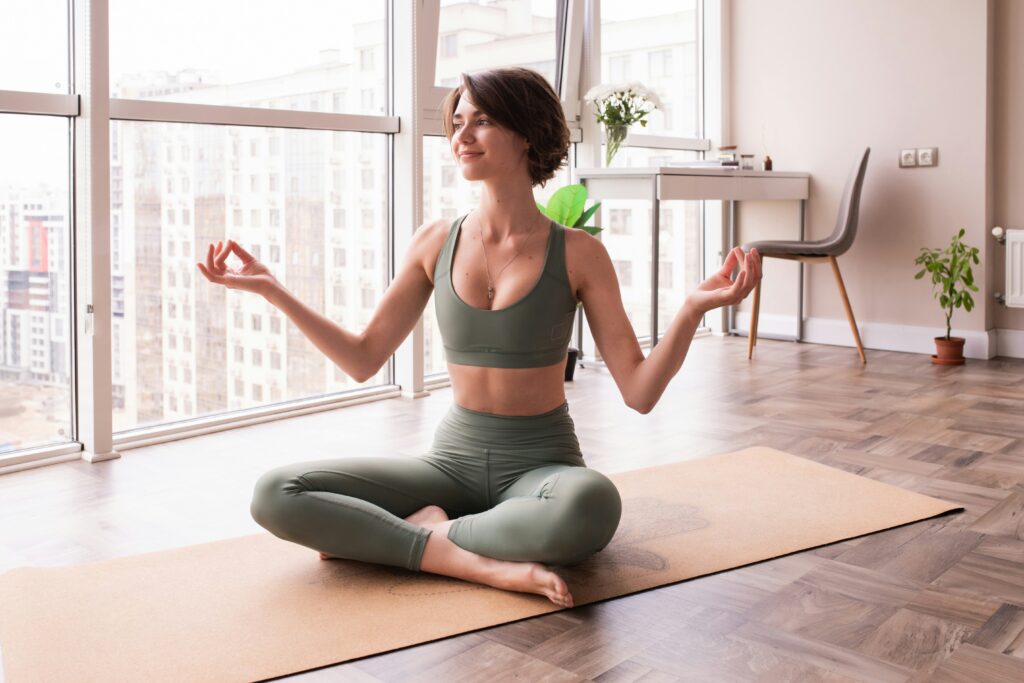
By trading the aggressive, overstimulating environment of the modern world for a low-stimulation evening yoga sanctuary at home, you can systematically prepare your mind and muscles for deep sleep. Just 15 minutes of slow, deep-stretching floor movements performed in a low-light environment can act as an organic sedative for your nervous system.
Here is your 1,200-word tactical blueprint to designing a low-stimulus evening sanctuary, understanding the biology of sleep-focused movement, and mastering a restorative floor-yoga routine.
1. The Sensory Environment: Designing the Downshift
To successfully transition your brain out of a high-stress state, you must first manipulate your physical environment. Your brain relies heavily on environmental data to regulate your internal circadian clock and initiate the production of melatonin—the primary hormone responsible for orchestrating sleep.
The Lighting Matrix
Overhead lighting, especially cool white LED or fluorescent globes, acts as a biological stop sign for melatonin production. To create your sanctuary, turn off every overhead switch in your room. Instead, introduce soft, amber-toned lighting positioned strictly at or below eye level. Salt lamps, dimmable smart bulbs set to a warm candle-glow hue (around 2200K), or simple battery-powered faux candles are ideal. This low-angle, warm-spectrum lighting mimics the natural geometry of a setting sun, instantly signaling to your pineal gland that it is safe to wind down.
The Auditory Container
The auditory landscape of your workspace or a commercial gym is often loud, jarring, and fast-paced. To ground your evening practice, fill your room with a low-tempo, texturally rich lofi soundscape or ambient white noise. Slow, instrumental lofi beats operating between 60 to 70 beats per minute work in perfect alignment with a resting human heart rate. This auditory consistency acts as a gentle focus container, masking unpredictable outside traffic noises and coaxing your brain waves to slow down from active beta frequencies into relaxed alpha and theta patterns.
2. The Physiology of Floor Yoga: The Parasympathetic Shift
Once your sensory environment is locked in, the physical practice of slow, deep-stretching floor yoga begins to restructure your internal chemistry. This style of movement does not seek to build cardiovascular endurance or muscular hypertrophy; its sole objective is to trigger the parasympathetic nervous system—the body’s natural “rest and digest” mechanism.
When you sit or stand all day, gravity causes blood to pool in your lower extremities, and your muscles maintain a baseline level of structural tension just to keep you upright. This chronic, low-level physical contraction acts as a silent feedback loop that keeps your mind on high alert.
By shifting your entire practice onto the floor, you completely remove the gravitational demand on your skeletal framework. Your heart rate naturally slows down because it no longer has to pump blood aggressively against gravity.
Furthermore, holding slow, deep stretches for extended periods stimulates the mechanoreceptors within your muscle spindles and deep fascial tissues. These receptors send immediate inhibitory signals to your brain, essentially telling your central nervous system that the danger has passed and that it is safe to release the physical armor of the day.
3. The 15-Minute Sleep-Prep Sequence
This zero-prep, purely floor-based sequence requires no advanced flexibility or specialized athletic gear. Move slowly between these postures, holding each for roughly 3 minutes, and anchor your focus entirely on slow, deep nasal breathing.
Posture 1: Child’s Pose (Balasana)
Kneel on your floor mat or a plush rug, bring your big toes together to touch, and separate your knees about hip-width apart. Sit your hips back firmly onto your heels, and gently drape your torso forward between your thighs. Extend your arms out long in front of you, or rest them loosely alongside your legs, and let your forehead rest completely on the floor.
Child’s pose is the ultimate protective posture. By drawing your body inward and resting your forehead against a solid surface, you instantly pacify the nervous system’s startle reflex. Focus on breathing deeply into the back of your rib cage, allowing your lower back and shoulder blades to expand with every inhalation and melt toward the ground with every exhalation.
Posture 2: Supported Sphinx Pose (Salamba Bhujangasana)
Lie completely flat on your stomach. Bring your elbows directly underneath your shoulders, keeping your forearms parallel to one another on the mat. Gently press your palms into the floor and lift your chest forward and up, creating a mild, supported arch in your lower spine. Keep your gaze dropped softly toward the space between your hands to avoid straining your neck.
This gentle backbend serves as a direct antidote to a long day spent hunching over a laptop or steering wheel. It opens up the chest and diaphragm, allowing for maximum lung expansion. Deep, uninhibited diaphragmatic breathing stimulates the vagus nerve, which acts as the primary highway for parasympathetic communication between your body and your brain, driving your heart rate and blood pressure down into a restful state.
Posture 3: Reclined Butterfly Pose (Supta Baddha Konasana)
Flip over onto your back. Bring the soles of your feet together to touch, and let your knees open out wide to the sides of the room, creating a diamond shape with your legs. If the stretch in your inner thighs feels too intense, place a bed pillow or a folded blanket underneath the outer edges of each thigh for structural support. Place one hand on your heart and one hand on your stomach.
The hips carry a tremendous amount of emotional and physical stress from daily life. Opening the hips in a reclined, supported position allows for a total release of deep pelvic and lower abdominal tension. As you rest in this posture, feel your belly rise and fall beneath your palms, keeping your inhalations and exhalations perfectly balanced in length.
Posture 4: Legs-Up-the-Wall Pose (Viparita Karani)
Scoot your hips as close to an empty wall space as comfortably possible, roll onto your back, and extend your legs straight up the wall so your body forms an L-shape. Rest your arms out wide to your sides, palms facing upward in a gesture of complete surrender. Close your eyes and let the wall do 100% of the structural work keeping your legs elevated.
This posture is a profound circulatory restoration mechanism. By elevating your legs above your heart, you facilitate effortless venous drainage, easing the workload on your cardiovascular system and clearing metabolic waste out of your lower limbs. It brings a deep, cooling sense of physical relief to tired feet and heavy legs, acting as a direct physical prelude to deep sleep.
Final Thoughts
Transitioning to a low-stimulation evening yoga sanctuary is the ultimate act of modern physical self-care and resourcefulness. It proves that optimization of health does not always require high-intensity effort or expensive fitness gadgets. By intentionally dimming the lights, slowing down the tempo of your environment, and spending 15 minutes in quiet connection with your breath and your body, you take total control over your evening recovery cycle.
Banish the unmindful, high-stimulus lifestyle loop tonight. Turn off the bright overhead lights, queue up your favorite soft lofi playlist, step onto the floor, and allow the gentle rhythm of slow yoga to safely guide your body into a night of profound, healing rest.