

We’re letting you know that this post contains sponsored links which Your Savvy Purse receives compensation for, which may impact their order of appearance.
We have all experienced it: you walk into a room, catch a fleeting note of a specific scent—perhaps fresh pine, rich vanilla, or sharp citrus—and you are instantly transported. Suddenly, your posture changes, your mind settles, or a wave of clean energy washes over you.
This isn’t just a fleeting emotional reaction. It is a biological response. Of all our five senses, the sense of smell is the only one with a direct, unmediated pathway to the limbic system—the ancient part of the brain that governs memory, emotion, and our nervous system’s stress responses.
In a world filled with digital noise, blue-light fatigue, and packed schedules, we often look for complex ways to reset our internal batteries. We buy tech gadgets, download mindfulness apps, or restructure our daily calendars. But one of the most powerful, immediate tools for mental clarity is already right under our noses: Functional Fragrance.
By learning the art of fragrance layering—combining clean home scents, targeted essential oils, and ambient notes—you can intentionally signal your brain to shift modes. You can transform your home office into an deep-focus sanctuary, your bedroom into a zero-stress recovery zone, and your living space into a bright haven of grounded optimism.
Here is your 1,200-word masterclass on using scent as a strategic wellness tool to design your daily environment.
1. The Science of Scent: Why It Changes Your Brain
Before we talk about the layers, we have to look at the mechanics. When you inhale an aroma molecule, it binds to olfactory receptors that send immediate, lightning-fast signals to your amygdala and hippocampus.
Unlike sight or sound, which must be processed through the brain’s thalamus first, scent bypasses the rational mind entirely. It hits the emotional center of your brain before you can even consciously identify what you are smelling.
This is why synthetic, overpowering “mall fragrances” can instantly trigger a subtle headache or an anxious, claustrophobic feeling, while clean, botanical notes can drop your heart rate in seconds. To use scent functionally, we must choose high-quality, pure ingredients and apply them with specific architectural layers.
2. The Three Layers of Home Fragrance Architecture
Just like a luxury perfume or a perfectly balanced capsule wardrobe, an intentional home scent profile relies on a structural hierarchy: the Base Note, the Ambient Note, and the Active Note.
The Base Note (The Constant)
This is the invisible background hum of your space. It should be subtle, grounding, and persistent. You achieve your Base Note through continuous, passive diffusion—like a reed diffuser placed near an entryway or a stone oil warmer in the corner of the room.
- The Best Base Ingredients: Rich woods (sandalwood, cedar), warm resins (amber, frankincense), or earthy grasses (vetiver). These notes ground the nervous system and provide a comforting sense of stability.
The Ambient Note (The Vibe)
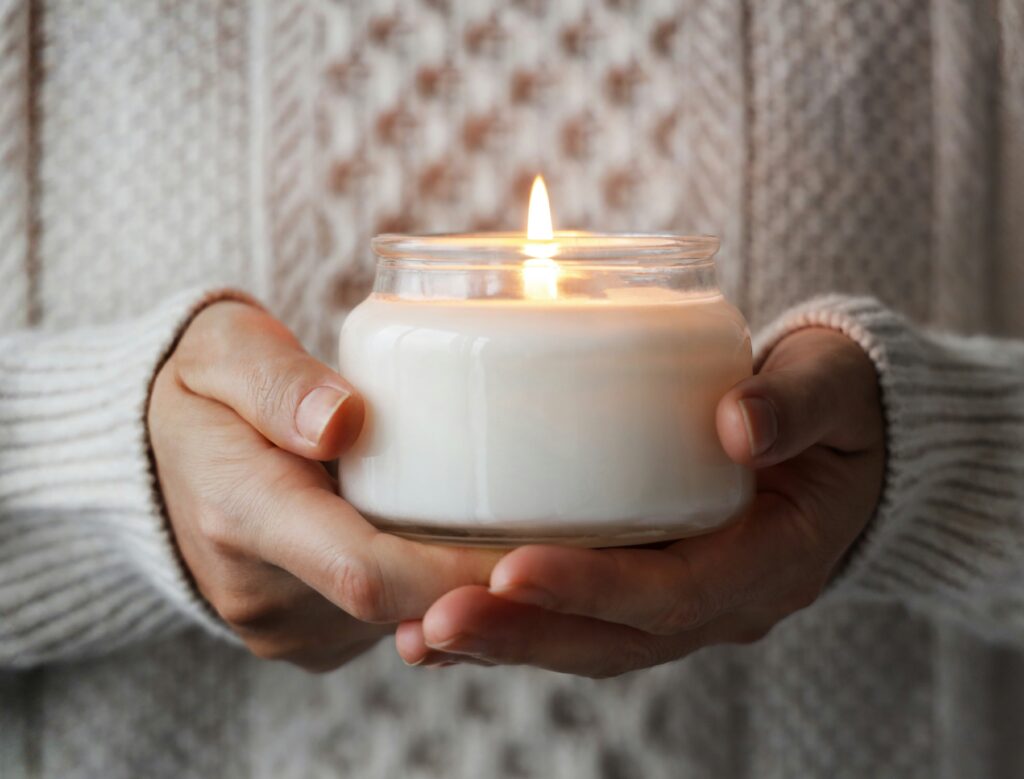
The Ambient Note sets the specific energy of the room for a few hours at a time. This is the layer you control with intention, usually by lighting a clean-burning soy or beeswax candle or running a cold-water ultrasonic mist diffuser.
- The Best Ambient Ingredients: Calming botanicals (lavender, chamomile), soft florals (neroli, jasmine), or clean greens (eucalyptus, white tea).
The Active Note (The Catalyst)
This is your rapid-response tool. The Active Note is used for immediate behavioral modification—like a quick mist of an essential oil room spray right before a high-stakes Zoom presentation, or a drop of oil rubbed into your palms during a mid-afternoon energy slump.
- The Best Active Ingredients: High-vibe citruses (bergamot, grapefruit, lemon) or sharp stimulants (peppermint, rosemary).
3. The Custom Scent Scripts for Your Day
To implement this functional tool, let’s look at three specific scent combinations designed to guide you through your daily rituals.
Script 1: The High-Focus Home Office (8:00 AM – 12:00 PM)
The goal here is cognitive sharpness, sustained attention, and the reduction of mental fatigue.
- The Base Layer: Cedarwood reed diffuser (promotes mental grounding and structural focus).
- The Ambient Layer: Run an ultrasonic diffuser with a mix of Rosemary and Lemon essential oils. Clinical studies have shown that rosemary can actually improve cognitive performance and memory retention, while lemon reduces editing errors.
- The Active Catalyst: Keep a room spray of Peppermint next to your laptop. If you feel your attention drifting during a deep-work block, spray the air around your desk. The mint instantly clarifies the respiratory tract and delivers a jolt of neurological alertness.
Script 2: The Mid-Day Grounding Reset (12:00 PM – 4:00 PM)
This is the window where the mental load of the day accumulates, and stress can begin to manifest as physical tension in the shoulders and jaw.
- The Scent Profile:Bergamot and Sweet Orange.
- Why it works: Citrus oils are generally uplifting, but Bergamot is unique because it is chemically proven to be both a stimulant and a sedative. It calms the central nervous system while simultaneously clearing away brain fog, allowing you to finish your afternoon tasks with calm efficiency.
Script 3: The Deep-Calm Evening Sanctuary (7:00 PM – 10:00 PM)
To prepare your body for deep sleep, you must send an undeniable signal to your brain that the production of stress hormones needs to shut down completely.
- The Base Layer: Warm Amber or Vetiver.
- The Ambient Layer: Light a clean beeswax candle scented with Lavender and Roman Chamomile. Lavender contains high amounts of linalool, a natural compound proven to lower blood pressure and ease the mind out of a “fight-or-flight” state.
- The Active Catalyst: A linen spray of Ylang-Ylang or Clary Sage misted directly onto your pillows during your evening wind-down ritual.
4. The Savvy Checklist for Pure Aromatherapy
To ensure your functional fragrance routine is an asset to your health rather than a toxic burden, keep these guidelines in mind:
- Banish the Synthetic Paraffin: Many commercial candles are made from paraffin wax (a petroleum byproduct) and synthetic “fragrance oils” that release harmful VOCs into your indoor air. Choose 100% soy, coconut, or beeswax candles with unbleached cotton wicks.
- Look for Latin Names: When buying essential oils for your diffuser, check the bottle for the botanical Latin name (e.g., Lavandula angustifolia for true lavender). If the label just says “Lavender Scented Oil,” it is likely a synthetic chemical replica that lacks the therapeutic properties of the actual plant.
- Clean Your Tech: If you use an ultrasonic water diffuser, empty it daily and wipe it down with a drop of white vinegar once a week. Mold or mineral buildup in your diffuser will negate all the high-vibe benefits of your oils.
Final Thoughts
Your sense of smell is a direct, customizable dial for your nervous system. By treating home fragrance as a functional design choice rather than an afterthought, you can curate an environment that actively works to protect your time, your energy, and your peace of mind.
You don’t need to change your entire life to change your mood. Sometimes, you just need to change the air. Invest in a few pure, high-quality botanical oils, set up your office focus layers tomorrow morning, and watch your mental load settle into a beautiful, intentional flow.