

We’re letting you know that this post contains sponsored links which Your Savvy Purse receives compensation for, which may impact their order of appearance.
Decluttering your wardrobe isn’t just about having a cleaner closet—it’s a smart financial move and one of the easiest ways to regain control over spending habits, daily stress, and personal style. Most people wear only a small fraction of what they own, yet closets continue filling with sale items, impulse purchases, and clothing saved for a future that never comes. When you clear out what no longer serves you, you’re left with a wardrobe composed of pieces you actually love and use—ultimately saving money and reducing waste.
Decluttering clothes may feel overwhelming, but breaking it into intentional steps makes the process empowering instead of stressful. Below are practical strategies to help you simplify, organize, and build a wardrobe that works with your real lifestyle and budget.
1. Start With a Purpose
Before pulling anything from hangers, identify your goal. Are you decluttering to create more space, reduce spending, redefine your style, or prepare for seasonal changes? Knowing your motivation keeps you focused when emotions or decision fatigue appear.
Ask yourself:
• What do I want my wardrobe to feel like?
• What frustrates me about my closet right now?
• What do I want more (and less) of in my clothing?
When you have a purpose, it becomes easier to part with items that no longer align with your needs.
2. Take Everything Out
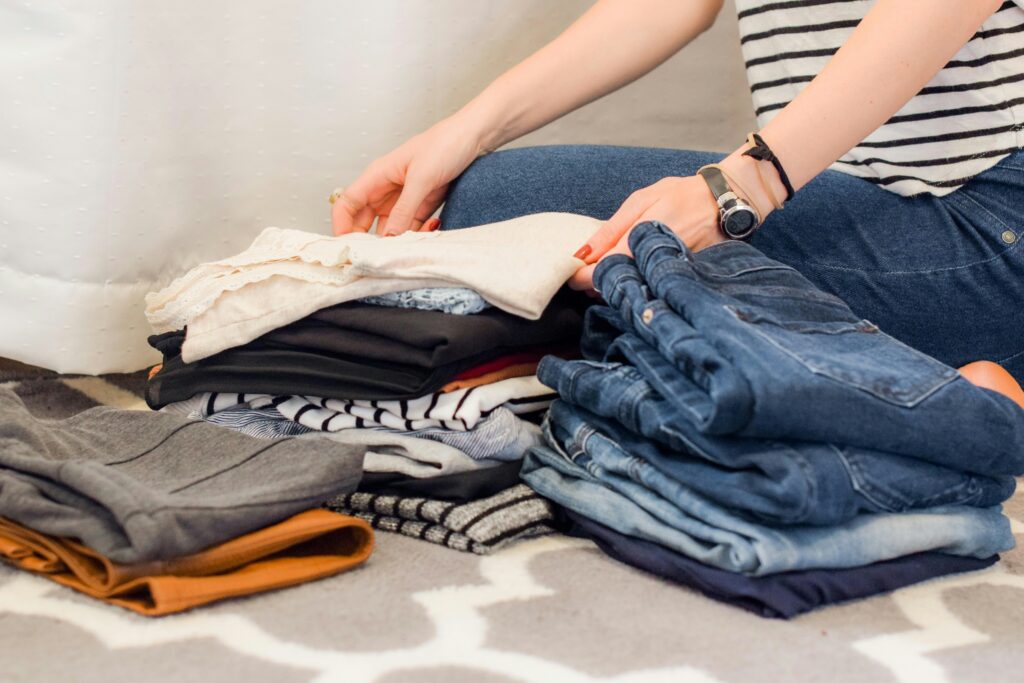
A full reset works better than flipping through hangers. Remove every piece from the closet and drawers so you can see the full volume of what you actually own. This creates an immediate reality check and helps separate emotional attachment from practicality.
Sort into these clear piles:
• Keep
• Donate
• Sell
• Recycle or discard (for damaged items)
Try everything on if necessary. Clothing that stays should fit your body, lifestyle, and confidence—not a past or future version of yourself.
3. Use the Practical 5-Question Test
For each item you’re unsure about, ask:
- Do I wear this regularly?
- Does it fit comfortably right now?
- Does it reflect my current style and life?
- Would I buy it again today?
- Do I have something similar I reach for more often?
If the answer is no to most, it is safe to let it go.
4. Sort by Category, Not Location
Group clothing into categories such as:
• Jeans
• T-shirts
• Dresses
• Sweaters
• Activewear
• Coats
• Shoes
Seeing 15 pairs of leggings or 27 black shirts makes decision-making automatic and helps identify true needs versus duplicates.
5. Create a “Maybe Box”
If certain items feel emotionally difficult to release, place them in a box with a date marked 60 days in the future. Store it out of sight. If you never look for anything inside, you can donate or sell without stress.
This method builds confidence and prevents declutter regret or rushing decisions.
6. Organize What You Keep
The goal isn’t to have the smallest wardrobe—it’s to have a functional one.
Try:
• Matching hangers for a clean, uniform look
• File-folding clothing so everything is visible
• Hanging by category and color so items are easy to find
• Storing seasonal clothing separately
A visually calm closet makes getting dressed simpler and prevents unnecessary purchases.
7. Sell Items to Recover Value
Well cared-for clothing can be turned into real money instead of collecting dust. Some selling options include:
• Plato’s Closet or local consignment shops
• Poshmark, Depop, eBay, or Mercari
• Facebook Marketplace or buy-sell groups
Use this money as a clothing budget for future needs or save it toward a financial goal.
8. Donate to a Cause
Giving clothing a second life is rewarding and sustainable. Look for local shelters, women’s resource centers, thrift stores, or community clothing swaps. Items beyond repair can be recycled through textile programs rather than going to landfill.
9. Create Rules to Avoid Future Clutter
Decluttering doesn’t end when the bags leave the house. Choose a system to maintain your wardrobe long-term, such as:
• The one-in, one-out rule
• Building a seasonal capsule
• Setting a clothing budget
• Shopping with a list instead of impulse buying
Intentional buying ensures that clutter never returns.
Final Thoughts
Decluttering clothes is an act of financial clarity, self-awareness, and emotional release. When you remove what no longer fits your body or your life, you make space for confidence, freedom, and smarter decision-making. A simplified closet saves time each morning, reduces stress, and prevents wasteful spending—allowing you to invest in pieces that truly add value.
Take the process slowly, celebrate progress, and remember: your wardrobe should serve you, not overwhelm you.