

We’re letting you know that this post contains sponsored links which Your Savvy Purse receives compensation for, which may impact their order of appearance.
For decades, the standard blueprint for American retirement followed a predictable, stationary script. You wrapped up your final professional chapter, downsized the family home, settled into a quiet master-planned community, and limited your travel to occasional commercial flights or structured cruises. It was a lifestyle model built on the concept of winding down—trading the high-yield stress of a career for a slow-paced, low-stimulation environment.
But a beautiful, high-energy cultural rebellion has taken hold of the modern retirement community. Active retirees are permanently rewriting the rules of their golden years. Instead of choosing stationary isolation, they are embracing a life of unhurried, self-directed exploration.
This movement has a definitive title: The Senior Van-Life Movement.
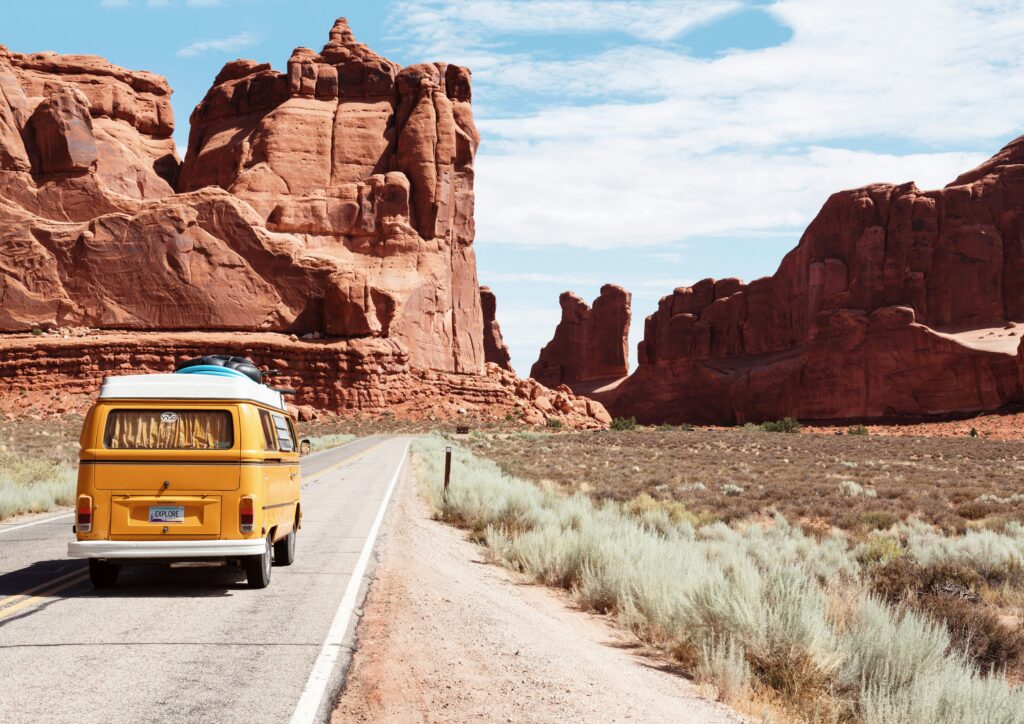
Driven by an obsession with outdoor wellness, natural scenery, and the pure freedom of the open highway, thousands of retirees are swapping their traditional real estate constraints for compact camper vans and small trailers.
The goal isn’t to live rough or rough it in the wilderness; it is to travel with a lightweight, premium home-on-wheels that allows you to step out of your door directly into the world’s most breathtaking landscapes.
By strategically outfitting a reliable rig, leaning into the incredible financial leverage of the lifetime America the Beautiful Senior Pass, and cultivating a slow-travel mindset, you can convert your retirement into an endless, low-stress national parks expedition.
The Senior Pass Secret: Your All-Access Passport to Cheap Camping
Before you look at vehicle specifications or interior design blueprints, you need to understand the absolute cornerstone of affordable retiree road-tripping: the America the Beautiful Senior Pass. Managed by the National Park Service, this program represents one of the most high-yield, high-return financial travel hacks available to anyone aged 62 or older.
For a one-time processing fee of exactly $80, a lifetime Senior Pass grants you and everyone traveling in your non-commercial vehicle unlimited, lifetime entry into more than 2,000 federal recreation sites across the United States. This includes all 63 premier National Parks, National Forests, Bureau of Land Management (BLM) territories, and Wildlife Refuges.
If you visit just three major parks like Yellowstone, Zion, and the Grand Canyon in a single year, the pass pays for itself entirely in waived entrance gate fees.
However, the hidden superpower of the Senior Pass lies in its Expanded Amenity Benefits. At hundreds of federal campgrounds across the country, flashing your Senior Pass instantly unlocks a 50% discount on overnight camping fees.
Instead of paying $30 to $40 a night for a premium campsite inside a pristine pine forest, you pay $15. It turns national park exploration into an incredibly low-overhead lifestyle model, allowing you to camp on sacred, protected American soil for less than the cost of a casual lunch.
Choosing the Rig: Low-Stress Mobility and Comfort
To keep your open-road lifestyle sustainable, you must choose a vehicle that balances physical comfort with stress-free drivability. The massive, class-A commercial buses of the past are quickly losing favor among active retirees; they are difficult to park, highly inefficient at the gas pump, and barred from navigating the tight, winding, historic mountain passes of our national parks.
Instead, look to the modern Class B camper van or a lightweight molded fiberglass trailer.
The Class B Camper Van (The Ultimate Solo or Couple Nomad)
Built on reliable factory chassis platforms like the Mercedes-Benz Sprinter, Ford Transit, or Ram ProMaster, these compact vans drive identically to a standard family SUV.
- The Mobility Win: At 19 to 22 feet in length, you can effortlessly park a Class B van in a standard grocery store parking spot, pull cleanly into tight national park campsites, and navigate narrow canyon roads without breaking a sweat.
- The Comfort Setup: Look for floorplans that feature permanent, fixed beds with premium memory foam mattresses to protect your spinal alignment. Prioritize models with a dedicated “wet bath”—a small, fully enclosed interior room featuring a flushing cassette toilet and a hot-water shower. Having a clean, private bathroom inside your vehicle eliminates the need to trek to public campground comfort stations in the middle of a cold night.
The Molded Fiberglass Trailer (The Lightweight Tow Alternative)
If you already own a reliable mid-sized SUV or light truck, investing in a small, aerodynamic molded fiberglass trailer (such as a Casita or Scamp) is an exceptionally smart, low-maintenance alternative.
- The Low-Stress Layout: Because these trailers are constructed from two heavy-duty fiberglass shells joined horizontally, they are completely impervious to water leaks and incredibly lightweight.
- The Basecamp Benefit: Once you tow your trailer into a national park campsite, you can unhook your tow vehicle in ten minutes. This leaves your trailer securely set up as your basecamp, freeing up your SUV or truck to explore tight trailhead parking lots and scenic overlooks throughout the day without hauling your entire house with you.
The Low-Friction Interior Outfitting Protocol
Once you select your mobile platform, your focus must shift to configuring the interior mechanics to minimize physical labor and maximize relaxation at dusk.
- The Lithium-Iron Power Matrix (LiFePO4): Ditch old, heavy, maintenance-heavy lead-acid batteries. Outfit your rig with modern Lithium-Iron Phosphate smart batteries paired with 200 to 400 watts of low-profile solar panels mounted to your roof. Lithium batteries store immense amounts of energy, charge rapidly from your vehicle’s alternator while you drive, and require zero water refills. This clean solar loop allows you to run your interior lights, cell phone boosters, water pumps, and even a high-efficiency 12-volt refrigerator for days in total off-grid comfort without ever needing to plug into noisy, high-friction park electrical hookups.
- The Induction Cooktop Shift: Avoid the hassle of tracking down propane refilling stations across rural state lines. Install a single-burner, drop-in induction cooktop that runs directly off your lithium battery bank. Induction cooking uses electromagnetic energy to heat your pans instantly without creating open flames or ambient heat inside the van, making morning coffee and evening meal prep clean, fast, and entirely flame-free.
- The Ergonomic Swivel Reset: Space optimization is key in a small footprint. Ensure your driver and passenger front seats are mounted on heavy-duty swivel bases. When you park for the evening, you can smoothly rotate these comfortable, factory-engineered chairs 180 degrees backward into the living space. This instantly doubles your interior seating area, converting your driving cockpit into an upscale, cozy lounge perfect for reading or planning the next day’s itinerary.
Final Thoughts
The National Parks “Van-Life” movement is far more than a passing internet travel trend—it is a profound lifestyle reclamation project for the modern retiree. It proves that aging gracefully does not require you to sit still or accept the artificial boundaries of a stationary routine. By equipping a compact, highly reliable mobile sanctuary and utilizing the lifetime leverage of the Senior National Parks Pass, you convert the map of the United States into your personal backyard.
Turn off the television, leave the crowded airport terminals behind, pack your camper van, and step into an unhurried, magnificent retirement defined by glowing campfire conversations, fresh mountain air, and the absolute freedom of the open road.